22.5° / North by Northeast Consulting / New York
There’s a break in your system. Everybody works around it. I close it.
I'm Lance. I build internal tools and workflow automation for New York gyms and service businesses. Client history, intake, staff handoffs, the report you rebuild by hand every month. Tell me where the work slows down and I'll tell you within one business day whether software is the right fix.
Portfolio
What I’ve built.
An internal tool for a Midtown gym, an app on the App Store, and a client site in production.
Working prototype, bought by the owner
A training app for a Midtown gym
The spreadsheet said a hundred pounds. The bar said seventy-five.
Clients at BUF Personal Training rotate between trainers by design. Training history lived in a spreadsheet behind a login, which is a hard thing to use with a client standing in front of you, so what someone did last week wasn't always where the next trainer could see it.
I train there, so I watched it happen. Nobody asked me to fix it. I built a working prototype on my own time and showed it to Ben, the owner, and he bought it. History follows the client from trainer to trainer, each session opens with the last performance, and his own progression rule sets the next weight.
It's a prototype running on made-up data. It isn't the finished product and it isn't running at the gym. Building the real thing is a separate decision.
- Client
- BUF Personal Training · Midtown
- Role
- Found the problem, designed and built the fix
- Status
- Working prototype, purchased
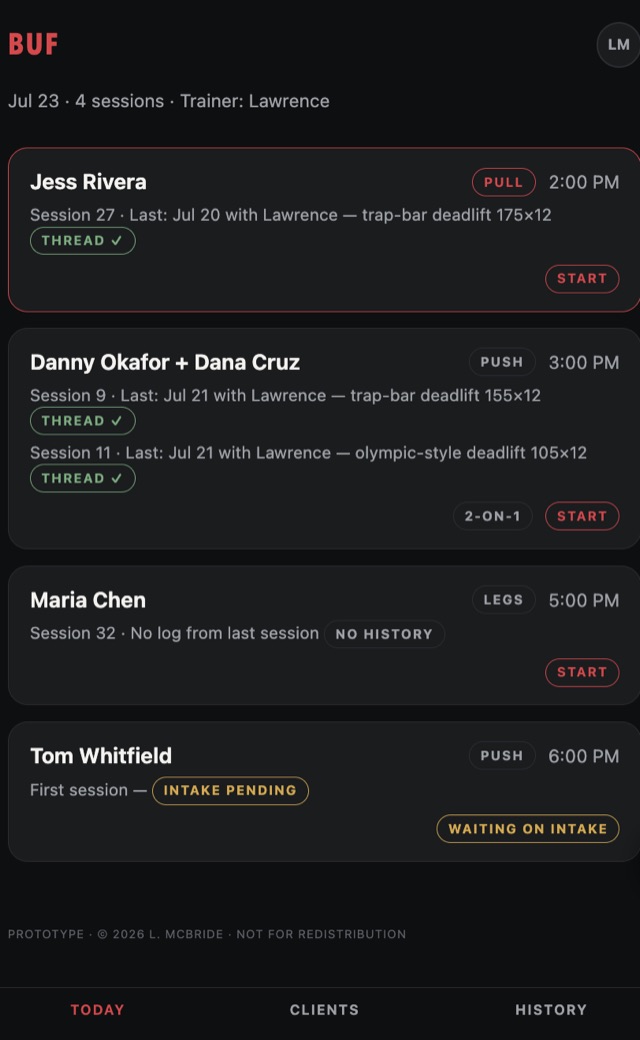
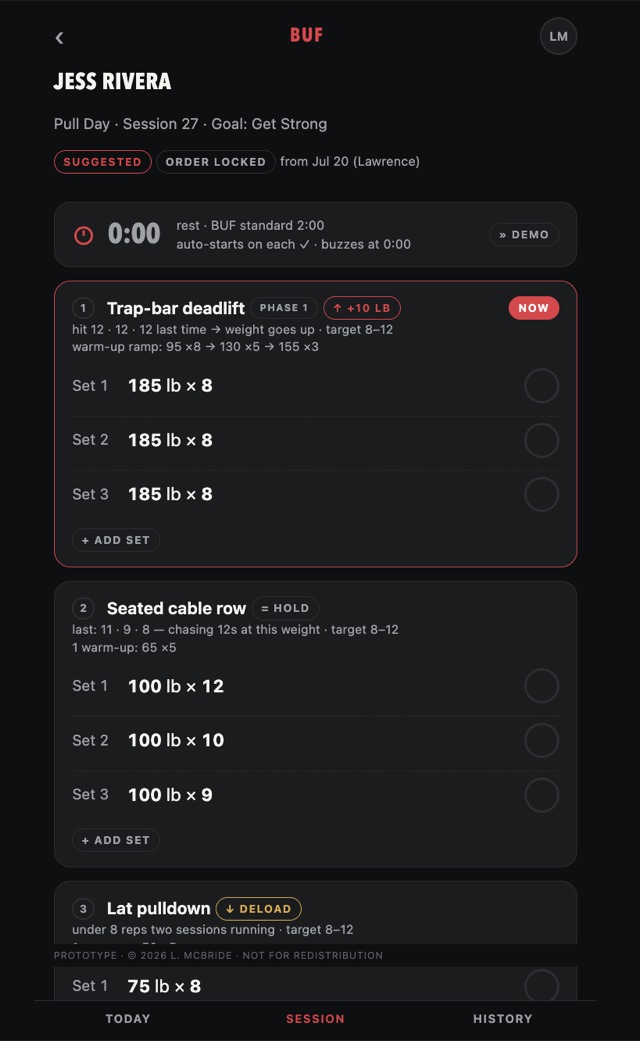
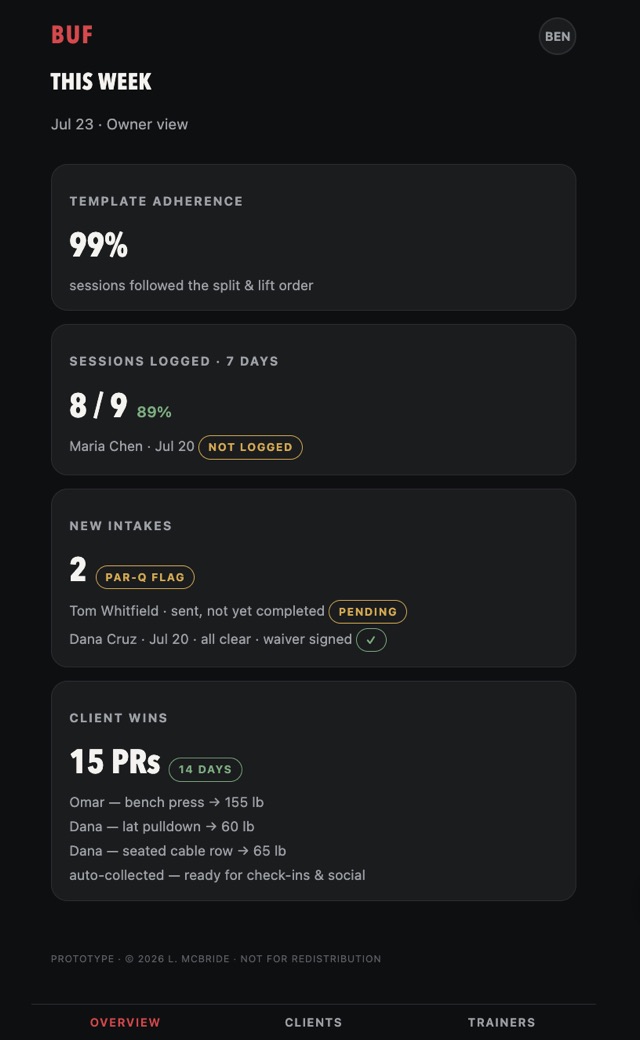
Prototype running on sample data. The names are invented.
Read the case study +
What made it obvious
A client asked me why his numbers kept moving around. The spreadsheet said one thing and the warm-up said another, and I didn't have a way to check which was right while he was standing there waiting.
What I did about it
I built it before anyone asked, because I was hitting the problem myself. Each trainer opens to their day. Each client shows what they last lifted and who they lifted it with, on a phone, in the middle of a session. Then I showed it to Ben and he bought the prototype.
Decisions worth naming
- The progression rule is the owner's, not mine. Twelve reps on every set and the weight goes up. Between eight and twelve, hold. Under eight twice running, deload. The job was to digitize his system. He kept the system.
- Compound lifts appear in a locked order every session, so the same lift always lands in the same place and the numbers can be compared week to week.
- Clients can only enter data during a trainer-started session at the gym. Home workouts would throw off the math.
- The owner's view is for seeing where the system needs support, not for scoring anyone. On the floor a trainer just sees the client's history, and the gym stays a gym.
Where it stands
Ben bought the prototype. That's where it stops. It runs on made-up data, it was never the full build, and it isn't in use at the gym. Whether it becomes the real thing is his call to make.
Same problem in your business?
Get a fixed-scope recommendation →BUMP: Workout Tracker
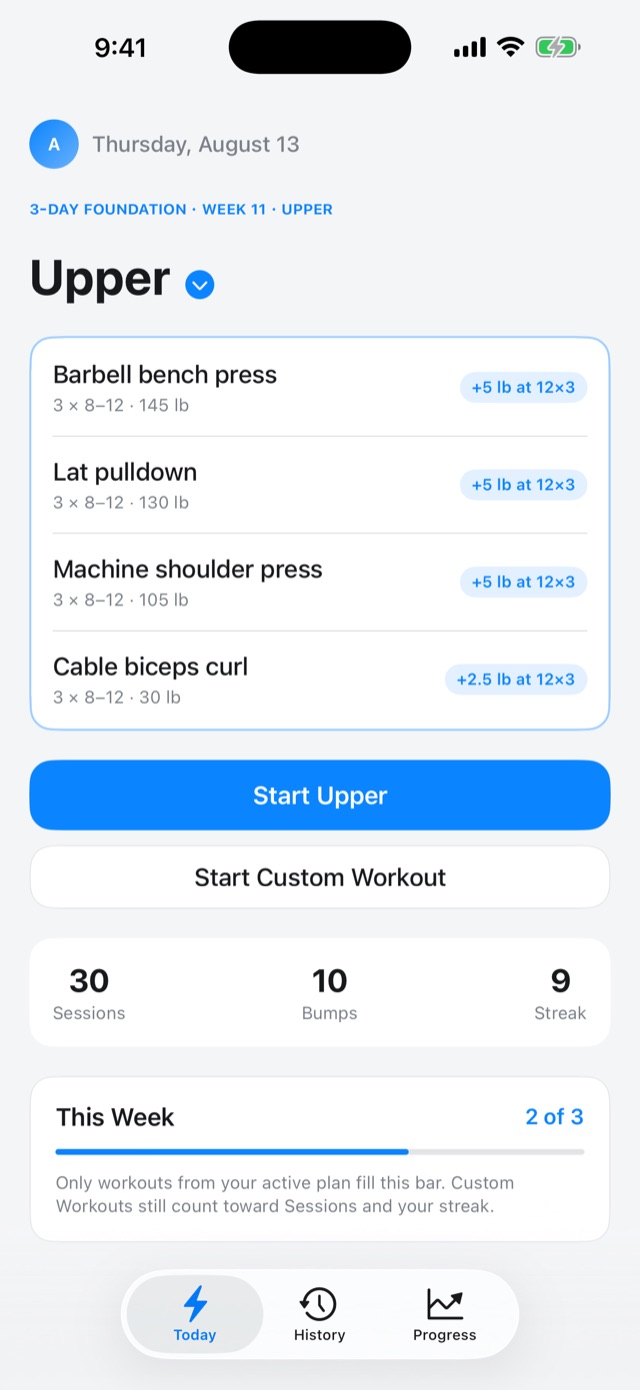
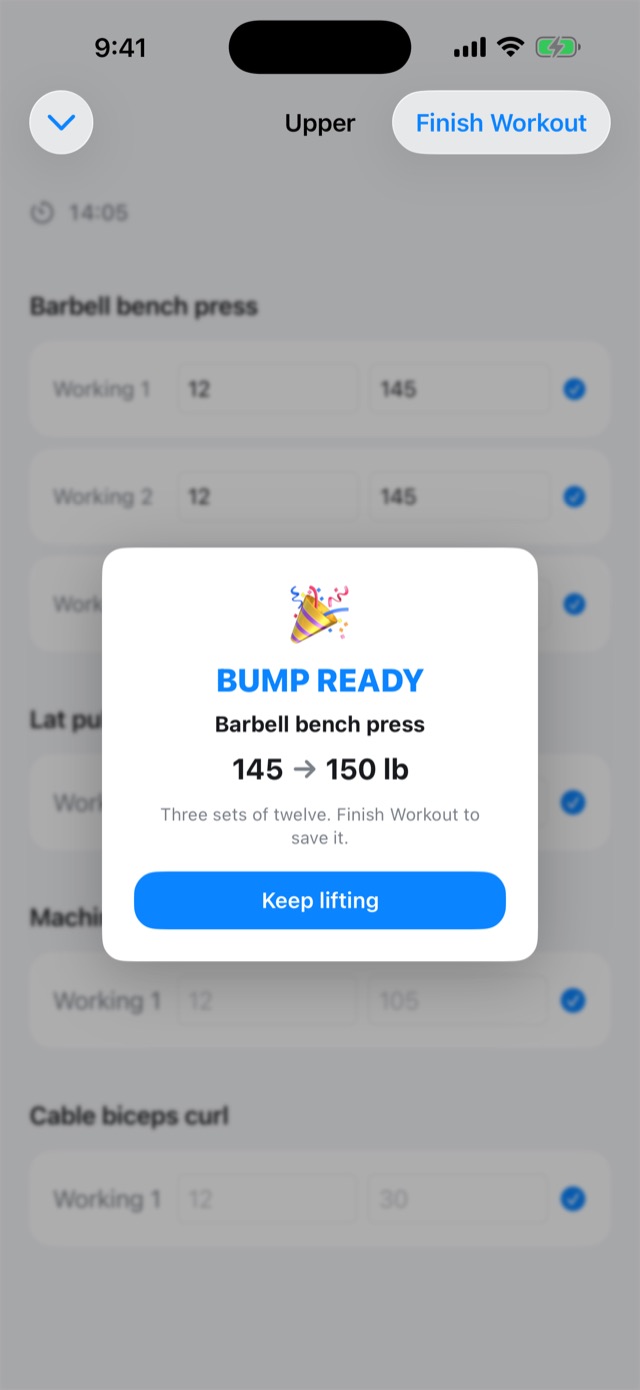
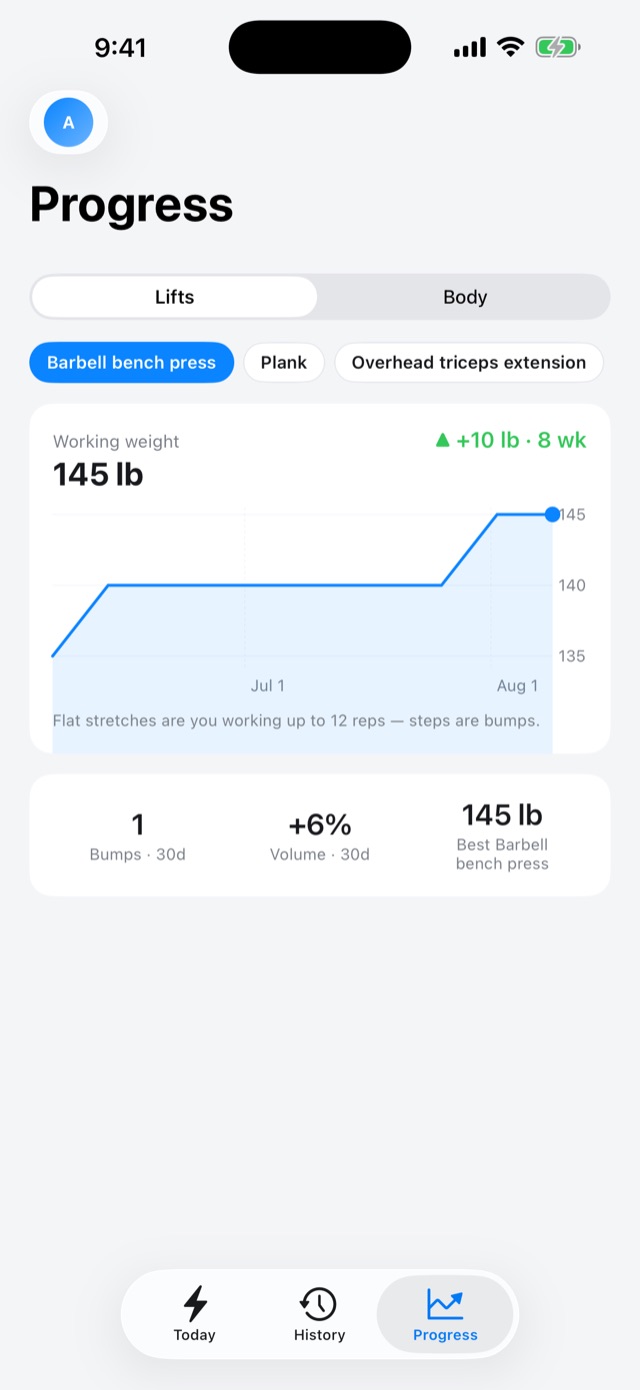
No guessing, no notebook, no "I think I did 135 last time." BUMP puts the last set in front of you while you're standing at the rack, then tells you when the numbers say to add weight. I designed it, built it, and shipped it myself.
Your Travel Nanny
Your Travel Nanny hired me to build their site and their intake. The business was already getting referrals with nowhere to send them. Now there's a place that explains the service and an application that starts a consultation without a phone call, asking the fourteen things that used to come out one question at a time.

What I build
One specialty, and two things that sit beside it.
If it doesn't save time, reduce mistakes, or help someone buy from you, it probably doesn't need to be built.
Mainly this
Internal tools and workflow automation
Software your team uses to do the work, replacing the spreadsheet, the group text, and the steps somebody is currently holding in their head. Client history that carries between staff. Intake that lands where the work happens. Handoffs with a record. An owner's view of what actually got done.
Gyms and studios: scheduling, programming, client history, trainer handoffs. I've worked on that floor for ten years, so you won't spend the first call teaching me how the business works. Other service businesses: everything between the first inquiry and the invoice.
Also
Focused apps
A single-purpose iOS or web app for something your customers or your staff do on a phone, when no existing product does the job. Built to be used, not demonstrated once and abandoned six weeks later.
Also
Websites and intake
The place you send someone who asks what you do, and the form that starts the job without a phone call. Fast on a phone, easy to understand, and built in accounts you own.
How it works
Three steps, in order.
A call
Thirty minutes on what happens now, where it slows down, and what you wish happened instead. Sometimes the answer isn't software, and I'll tell you that before you've paid me to build any.
A written scope
What I'm building, what I'm not building, what it costs, and when it will be done. All in writing before you commit.
Weekly builds
Something working in your hands the first week, and an updated build every week after. You don't have to imagine whether it's going in the right direction. You can use it and tell me.
Why it's fast
Small by design.
One person scopes the work, builds it, and puts it in front of you. That's the whole reason it moves.
- Direct access
- You talk to the person writing the code. Nobody sits between you and the work.
- Weekly working builds
- You use it and tell me. If it's drifting we find out while it's still cheap to correct.
- Client ownership
- Code, accounts, domain, and listings in your name. Someone else can take it over later if you want.
About
Lance McBride

Nobody wants software. They want the friction gone.
I build internal tools for small businesses in New York. Before that I spent twenty-five years working inside them: fifteen in food and beverage, then ten in fitness. Front of house, back of house, floor level.
That's where I learned what actually breaks. The notebook that should have been a database. The schedule held together by group texts. The handoff that only works when one particular person is standing there. Everybody works around it. Nobody has time to stop and fix it.
That's the part I do.
At the gym where I work, a client's history lived in a spreadsheet that was hard to open mid-session, so it wasn't always in front of whoever was training them that day. Nobody asked me to solve it. I built a working prototype that did, showed it to the owner, and he bought it. Your Travel Nanny hired me to build their site and the application that starts a consultation without a phone call. BUMP is an iOS app I designed, built, and put on the App Store on my own.
When you hire me you talk to the person writing the code. Nobody sits between you and the work.
I've been the person working around the broken process. I'd rather take it apart.
“North by Northeast: 22.5 degrees. A bearing, not a destination.”
NXNE Consulting LLC · New York, NY
Questions
Before you write.
How long does something take?
A landing page can take days. A focused internal tool usually takes two to four weeks. An app can take six to twelve, depending on what it needs to do. You get a scope and a delivery date in writing before work starts.
What does it cost?
You see the whole number before you decide. If the problem doesn't justify the cost of building something, I'll tell you that instead.
Do I own what you build?
Yes. Code, accounts, domains, and listings are in your name from the beginning. You're hiring me to build it, not renting it from me afterward.
I don't know what I need yet.
That's normal. Bring the problem, not a list of features. Figuring out what should be built, and what shouldn't, is the first part of the job.
Contact
Tell me where the work slows down.
A paragraph is enough. What happens now, who's involved, and what you wish happened instead. I'll reply within one business day and tell you whether it sounds worth solving with software.
What happens next
If it's a fit, we'll set up a thirty-minute call and I'll come back with a fixed scope and a fixed price. If it isn't, I'll tell you that too.
No newsletter, no drip sequence, no sales call you didn't ask for.
Rather just email? lance@nxne.ai